
Parts and assets · Lesson 18 · Approx. 7 minutes including practice
Illustrated parts catalogues
A useful catalogue links a recognisable view to an item reference and orderable part. Include equipment applicability and variant information. Confirm with the owner which parts can actually be supplied separately.
Step 1: Equipment identity
A documentation workflow, not an equipment operating sequence. Animation starts only when you choose Play.
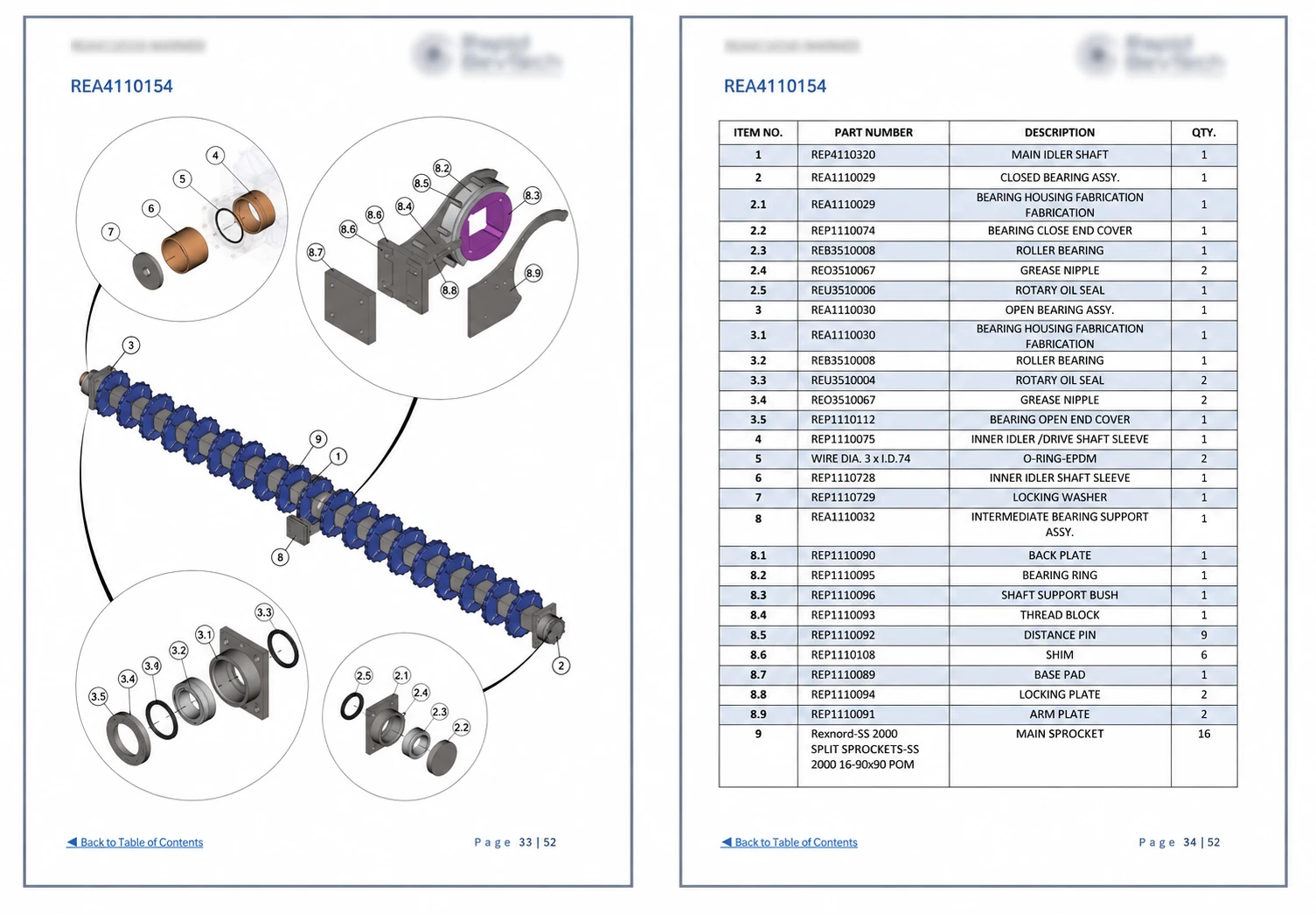
Build a path from equipment to orderable item
A catalogue helps someone move from a recognised machine or assembly to the correct approved part reference. Begin with equipment identity and configuration, then provide navigable assemblies, legible illustrations and linked item tables. The orderable item may be a kit or purchased unit rather than every visible component. Make that distinction explicit. Avoid implying that a visually similar item is an approved replacement without evidence from the responsible product owner.
Prepare and check the work
Test the catalogue using realistic information-finding tasks. Can a reader identify the machine variant, locate the right assembly and distinguish similar parts? Check balloon-to-table links, quantities, units of supply and any supersession notes. Preserve supplier and internal references in separate fields if both are useful. Record unresolved applicability questions as exceptions; never silently publish a guessed replacement just to complete the list.
Worked example · demonstration only
A user searches a long list for a seal and finds six rows with similar names. An assembly illustration and approved configuration reference narrow the search. The final ordering reference still needs product-owner approval; better navigation does not establish compatibility.
Guided practice and review evidence
Use only a demonstration dataset for this exercise: Design one catalogue page linking five balloons to five table rows. Before starting, write down the question the finished record should answer and identify the source information you would need on a real job. Keep a separate list of missing inputs. Prepare a first draft, then compare it with the topic-specific checks above. Ask another person to follow your references without explaining them verbally. Record where they hesitate, what information they cannot locate and any different interpretation. Keep a brief review log with four columns: observation, proposed action, responsible reviewer and closure evidence. Revise the example and repeat the information-finding check. Your evidence of completion is the revised demonstration record plus that log, not simply time spent reading. Do not upload client information to the academy or practise on operating equipment.
What good completion looks like
A useful result can be understood by someone who did not prepare it. They can identify its purpose, applicable item, source and review status, and they can distinguish confirmed information from unresolved questions. Pay particular attention to this failure mode: Similar appearance does not prove parts are interchangeable. Check the output in the format the recipient will use. A native file, spreadsheet and exported PDF can expose different problems. Keep the source revision and the issued output linked, and record any limitations of the handover. On a real project, follow the customer's authorised checking and approval arrangements before the information is used. The knowledge check below tests understanding of this lesson; it does not assess practical competence or authorise regulated work.
Practical workflow
- Establish the source: identify the approved input, document revision and person responsible for its technical content. Record missing information as an open question.
- Prepare a small representative example before applying the approach to a whole project. Check identifiers, units, references and the intended reader’s needs.
- Ask the nominated reviewer to check technical meaning. Capture the response, resolve comments and issue only under the agreed document-control process.
Review checklist
- Can another reader identify the source and applicable revision?
- Are assumptions and unresolved decisions clearly recorded?
- Is there evidence of the required review before issue?
Educational material and demonstration examples. Not accredited training, practical competency assessment or authority to perform regulated work. Use current approved sources and your responsible technical authority on real projects.